Sunday, January 30, 2011

Cambria's Moonstone Beach

Moonstone Beach is what most people associate with Cambria and certainly this nearly mile long boardwalk on the bluffs with occasional beach access is ideal for strolling. 
The Low Bluffs along Moonstone Beach
This has long been one of my favorite spots, and is also wheelchair accessible. Park anywhere along the beach side of Moonstone Drive, it’s all free, and you begin to walk. This is a more rugged beach, less flat sand and more washed up wood, seaweed and yes, moonstones. At high tide there’s little to no room to walk on the beach, but at low tide there is ample room to tide pool, watch the otters and the seals, ocassionally whales, and sit on the wood benches along the boardwalk. These benches were all made by locals, carved, sanded and placed here, each with a different feel and look to them. And there is a dedicated group of locals who keep the area clean, so please dispose of your trash properly. If you look closely you’ll find some not exactly hidden places to sit, but areas removed from the boardwalk where you can rest, or simply watch the waves and wildlife, or just bask in the sun and listen to the waves.

You’ll also notice, actually you can’t help but notice, the ground squirrels who pop out from under the boardwalk hoping you’ll give them food. Feeding them is frowned upon, but they are adventurous, curious and rather unintimidated. Ocasionally surfers dot the waves, but usually it's the pelicans and cormorants who rule here. Though hotels claim the other side of the road, there are no public facilities here. The closest are at Leffingwell landing at the north end of Moontone Drive.
Plan on spending some time here. Once you arrive, it will be hard to leave.
The Sunset at Moonstone Beach


Monday, January 17, 2011

The Ventura Mission: Main Street's History Lesson

The Ventura Mission on Main Street
Mission San Buenaventura (211 E. Main St., 805/643-4318, self guided tour is $2 for adults, and a mere 50 cents for kids children) was established on Easter Sunday, March 31, 1782, and it became the ninth mission founded in the total chain of 21 mission in the state. Like most missions, the first structure which lasted for 10 years, burned to the ground. There is no direct public access except through the gift shop. The interior courtyard is beautifully landscaped, with interlocking brick walkways and a very popular shrine to Mary to one side. There is a fountain in the center, surrounded by a few benches for refection. The church itself is long and narrow, a neo classical looking arch over the alter giving it a more modern feel to the interior. Carpet covers much of the original tile floors unfortunately and there’s a rather off putting sign dead center in the alter warning you that you are being videotaped. Behind the church is part of the original brick reservoir. In part, the mission prospered due to a seven mile aqueduct that was constructed from the Ventura River to the mission grounds. This allowed a wide variety of crops to grow, including orchards, gardens, fruits, vegetables, grains, and even exotic fruits such as bananas, coconuts, and figs. These helped greatly with the needed funds to support mission life.

The interior courtyard
The mission, like most of them, was built as a complete quadrangle. The church was on the southwest corner and a cemetery was on the west side on the church. A grade school now stands where the old cemetery was. In 1818, the pirate known as Bouchard, was seen off the coast of California and began terrorizing Ventura. The padres and Indians buried some of their valuables and sacred objects and literally took the rest to the mountains for about a month until the pirate and his band had gone. The church walls of tile, stone and adobe are just over six feet thick, built by Chumash Indian labor. It’s still an active church and one of the most visited sights in Ventura. To visit today you enter the gift shop first, with its miniature mission collection, spiritually oriented cards and gifts, then it’s up a few steps to their very small museum, which only holds a few items such as vestments and everyday utensils used during the mission period. The Mission is open to the public Monday through Friday 10 a.m. to 5 p.m.; Saturday 9 a.m. to 5 p.m., and on Sunday from 10 a.m. to 4 p.m. but know that Sunday church services means that, while you can go inside, you can't wander around. The Mission is closed on major holidays. http://www.sanbuenaventuramission.org/

Sunday, January 9, 2011

Let’s Get Physical: Seeing The Central Coast From The Outside

The Central Coast means being outside. There’s far too much to do, see and explore to spend time inside all the pretty buildings. Get your game on and sweat a little bit. You don’t have to over exert yourself, but the sun, sea, mountains and islands call to you to get involved. Here are some great ideas.

At East Beach the sand is low and flat

Hiking: Santa Barbara provides the best hiking experience, in part because the views from the mountains extend throughout the city, across the ocean and out to the islands. Whether you’re hiking near the coastal bluffs or up nearly 4,000 feet to the mountain ridges, you have expansive and breathtaking views.
Kayaking: The best kayaking hands down is at the Channel Islands, off Ventura. The islands are incredibly diverse and the volcanic formations, sea caves and small coves and beaches are perfect to make you feel like an explorer yourself. Or stay inside the harbors in Ventura and Santa Barbara and watch the boats, the seals and the birds.
Sea Caves At Santa Cruz Island
Surfing: Ventura’s got it all, world class spots like the Rincon, easily accessible low breaks like C Street. Plus you can get out of the water and walk three blocks for breakfast or lunch, then get back in the water. Ease of use and you have views to the islands.
Catching a wave at Pismo Beach
Boating: Santa Barbara provides the best backdrop for getting into a sailboat, powerboat, jet ski or sunset cruise. You can hug the harbor or go full tilt all the way to the Channel Islands. And best of all, you have the city itself set against the mountains as a backdrop with its beautiful coastline. Finish you trip by simply returning to the harbor and walk to a great meal close by. Morro Bay is also fantastic for boating and getting up close with Morro Rock, whales and other sealife.
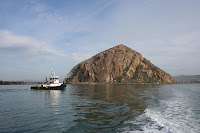
Morro Rock
Scuba Diving: If you dive, you must get to the Channel Islands. There’s no real point to beach dive. Anacapa and Santa Cruz are the closest islands and offer the best visibility and variety of things to see including sharks, seals, dolphins, lobsters and stunning kelp forests. These are day trips or you can pull an overnight.

Protected Bays Like This One At Anacapa Island Make Great Dive Spots
Biking: You can’t beat San Luis Obispo for biking. The best spot is all of Montana de Oro, yes, all 8,000 acres of it. You can bike on roads like Pecho Valley or get off road with a maze of single and double track fire roads, all of which intertwine through the last best piece of pristine land anywhere. There are great elevation gains, low flat scrub areas and coves, cliffs and trails to the water.

Friday, December 31, 2010

Santa Barbara - The Best Times to Visit

It seems that Santa Barbara has no past. It’s idyllic setting and stunning terrain do not give clues to its history, A small shelf sandwiched between mountains and Pacific Ocean appears to be suspended in time. But this town of roughly 120,000 people is fiercely proud of its cultural heritage, and Santa Barbara has a history that extends back since the Chumash Indians inhabited this area over 10,000 years ago. To limit a visit to Santa Barbara to merely the oceanfront and State Street, the usual suspects for most tourists, would be like ignoring part of your family. Sure, the focus in on these areas, but Santa Barbara has such a wealth of cultural, architectural and historical treasures that it requires time to immerse yourself in the area.
Santa Barbara's red-tiled roofs
Yes, there is the shopping, the wine industry, the Spanish architecture that dominates the region and a laid back vibe inspired by endless waves and eternal sunshine. But there is also a vast sense of physical activity and communal well being. No less than five farmers markets each and every week make healthy produce abundant and accessible, for example. The Rincon is a favorite surf spot, but eager surfers dot the waters everywhere. Santa Barbara can be adequately covered in three days, but even then there is so much to discover and each turn of a corner brings something new. It’s no surprise that the National Trust for Historic Preservation named Santa Barbara as a Distinctive Destination in 2009. There is much to absorb in Santa Barbara and if you stay long enough, like most of us, you won’t want to leave.
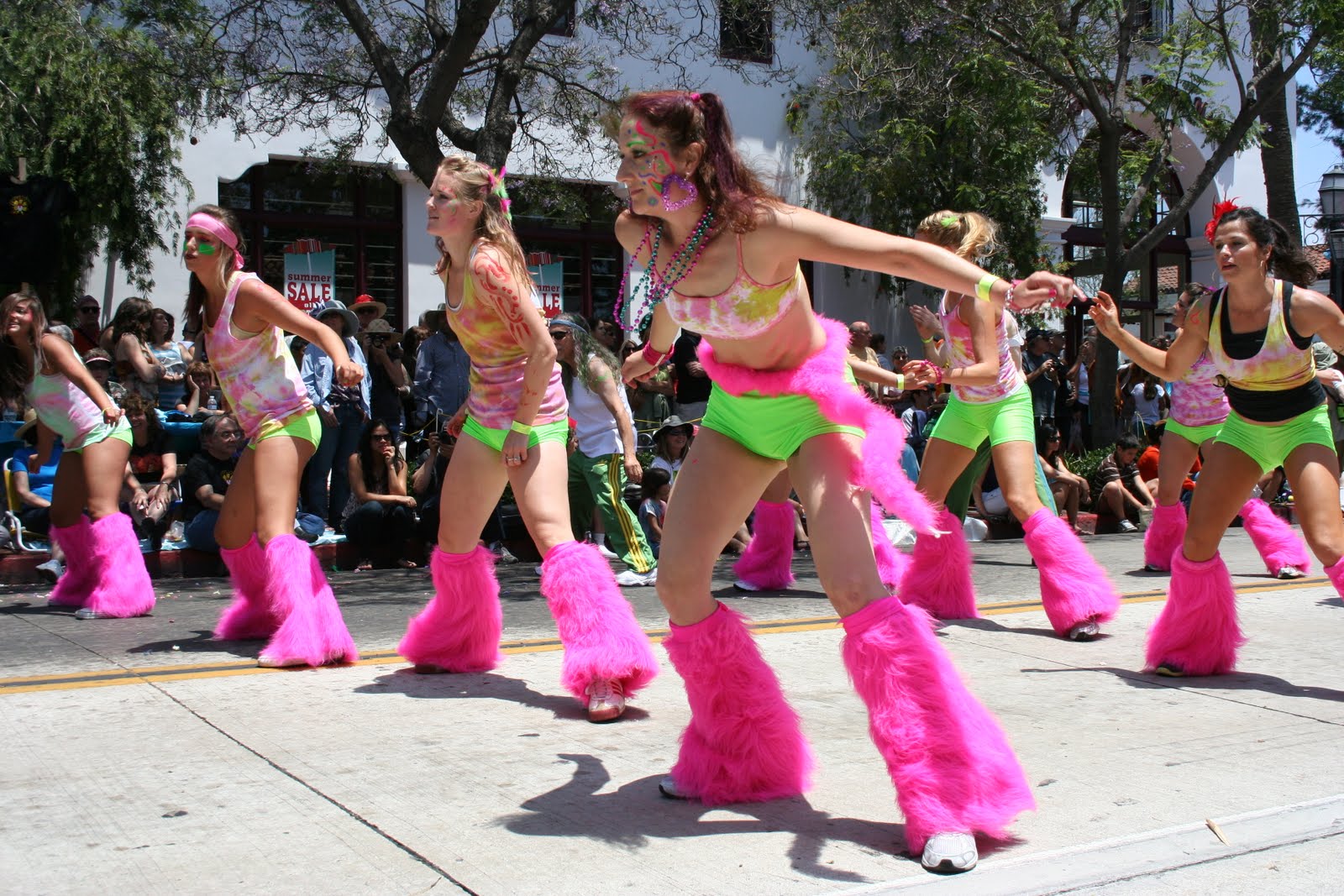
At the popular Solstice Parade
Santa Barbara, being fairly compact, can easily be enjoyed over a weekend. That doesn’t mean you can do everything you may want to do, but a weekend will give a great overview. It’s best to consider how active you are. If you want water activities, hiking and cycling, more time will be needed. If you are the meandering type, the waterfront and State Street will suite you fine. To fully explore, three or four days are needed to do justice. The best time to visit is not in the summer months. The idea time is from March to May, where everything is pristine after the mild winter rains. Summer gets the June gloom, lots of fog that sometimes doesn’t burn off until early afternoon. October through December is also a great time. There are more chances of rain, but I can’t tell you the number of Thanksgivings I’d had where the family has been at the beach playing in the water, burning off the turkey. So come visit and consider using my book Santa Barbara & The Central Coast as a roadmap to uncover the Central Coast!
Kick back on Moonstone Drive in Cambria